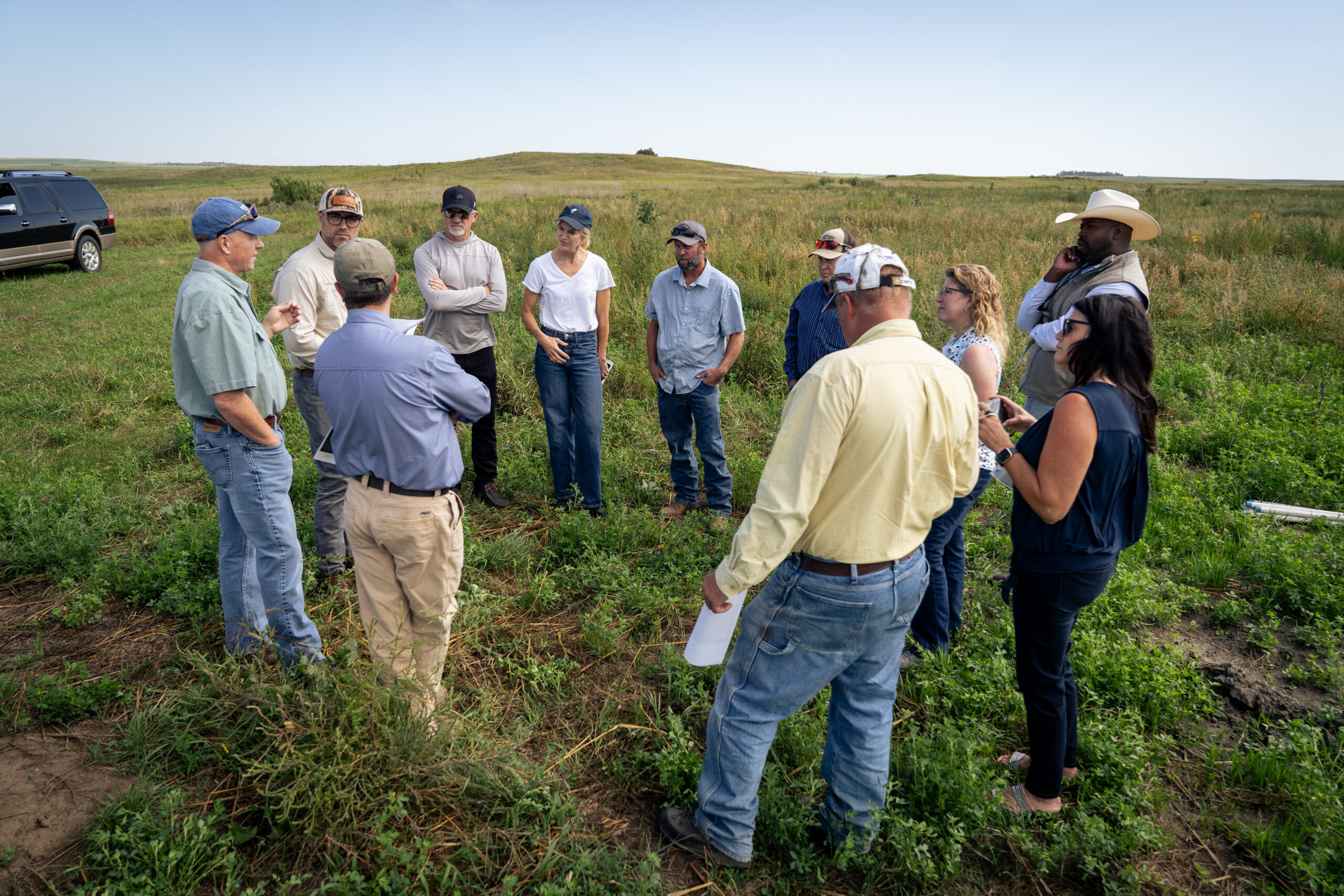
The North Dakota Conservation Forage Program (CFP) has become a practical model for how collaborative conservation can restore working lands across the Northern Great Plains. At its core, the program helps producers plant and manage high quality perennial grasslands that support both livestock operations and wildlife habitat. Grassland birds like the Bobolink and Grasshopper Sparrow depend on healthy, connected grasslands for nesting, food, and shelter, and many species are declining as these habitats are lost, degraded, or fragmented. Grassland restoration through CFP rebuilds native plant diversity, structure, and connectivity, creating the conditions grassland birds need to thrive across the seasons.
The program launched in 2021 with support from the North Dakota Outdoor Heritage Fund, North Dakota Wildlife Federation, and Audubon to restore grasslands on 18,000 acres in ND. Since then, a network of conservation and agriculture focused organizations have joined to make CFP a success and raise the goal for restoration to 45,000 acres in the region. In 2025, Audubon celebrated 100 projects completed, 10,000 acres planted, and 12,000 acres under contract. The success of CFP can be attributed to a network of partners that share responsibility, resources, and credibility with producers.
State agencies, conservation nonprofits, corporations, and local conservation districts each contribute something essential. Tech-nical specialists help producers design seed mixes and grazing strategies that balance soil health, grazing needs, and habitat value. Key investments from funders cover a portion of seed and establishment costs, support grazing infrastructure installation, and provide establishment payments to provide financial security during the transition period. Partners then leverage this financial assistance to enhance conservation outcomes and community benefits. This shared approach significantly reduces risk for producers and reinforces the understanding that conservation and ranching can exist as mutually beneficial land uses. CFP’s success has been driven by this alignment of expertise, financial support, and on the ground relationships.
The model has proven strong enough that in 2023, Audubon worked with Ducks Unlimited (DU) to expand the model in South Dakota through the Working Grasslands Partnership, with DU securing a $25M Regional Conservation Partnership Program award. The expansion recognizes that grassland systems and ranching economies do not stop at state borders. By adapting to lessons from the ND framework and emphasizing partner delivery, partners can offer a unified approach that supports forage establishment, grazing resilience, and wildlife habitat across a broader landscape. To date, Working Grasslands Partnership has signed landowner agreements across SD to restore 13,451 acres of cropland back to grass.
Together, these efforts are building a regional strategy for keeping grasslands intact and profitable. CFP has demonstrated that creative working lands solutions can restore grassland and meet the needs of our land stewards. The model’s expansion into SD exemplifies how a collaborative model can grow to meet the needs of producers and wildlife across the Northern Great Plains.
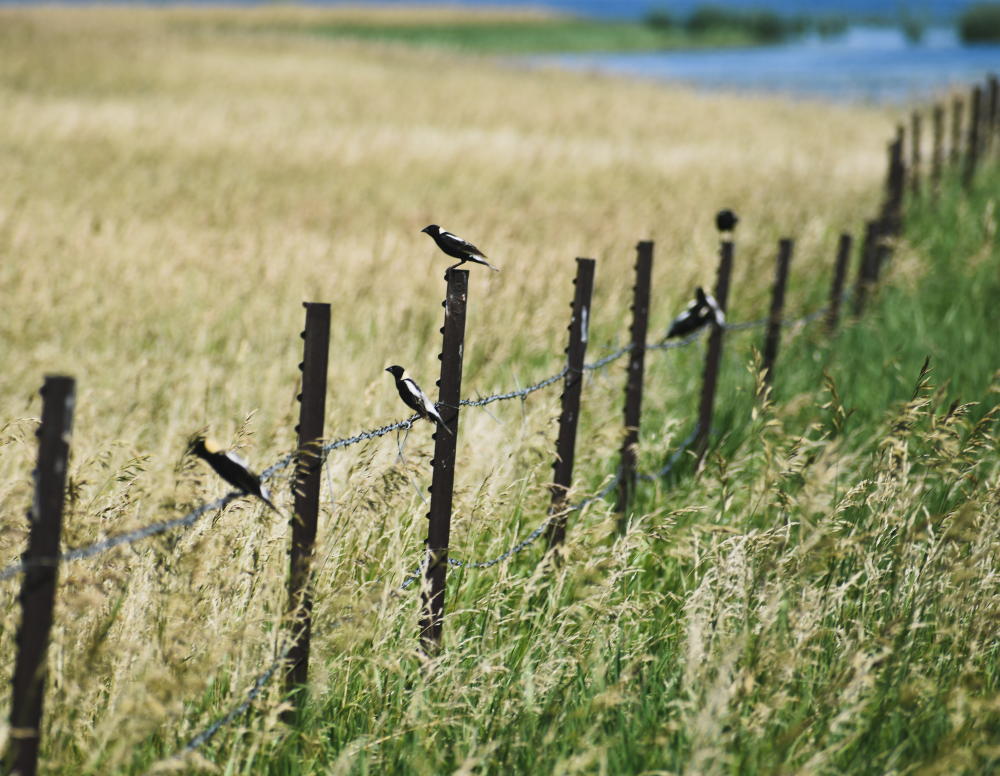
A Bobolink perches on a fence post on Scott WPA in Lake Andes Wetland Management District in South Dakota. These birds can navigate using the Earth’s magnetic field thanks to iron oxide bristles in their nasal cavity.