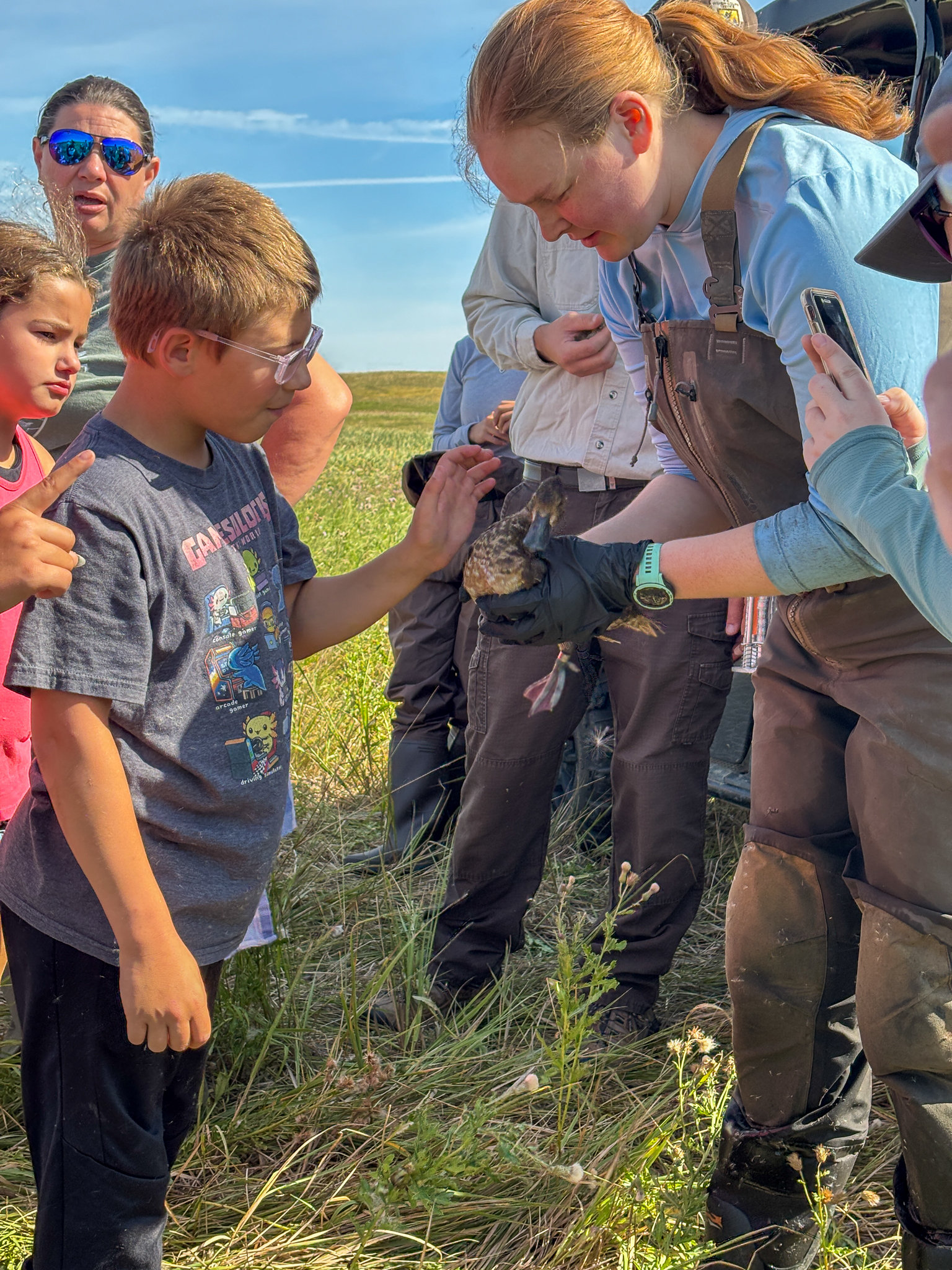
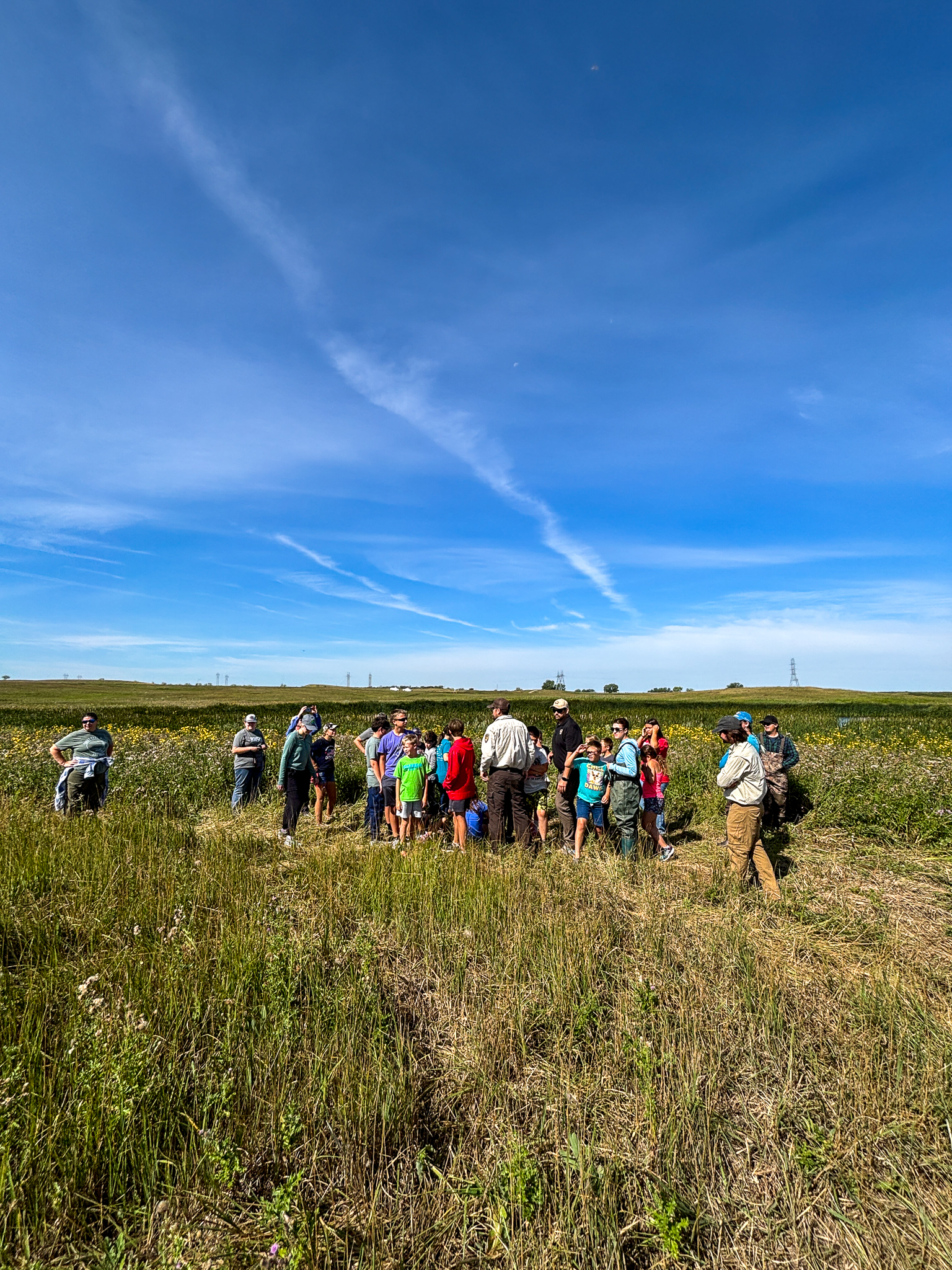
On a bright morning at Audubon National Wildlife Refuge, 4-H explorers traded classroom desks for prairie wetlands and textbooks for ducks. Alongside refuge staff and the U.S. Fish and Wildlife Service’s Habitat and Population Evaluation Team (HAPET), they discovered that science is not only something to read about; it’s a way to understand the lands and waters that support wildlife, communities, and everyday life.
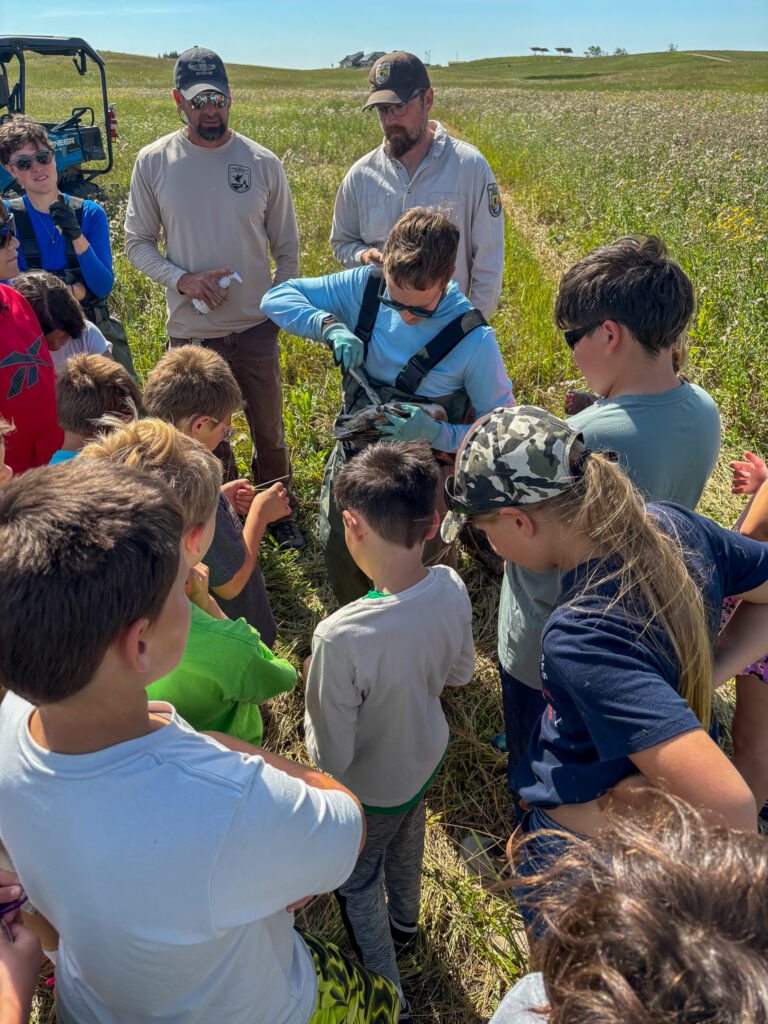
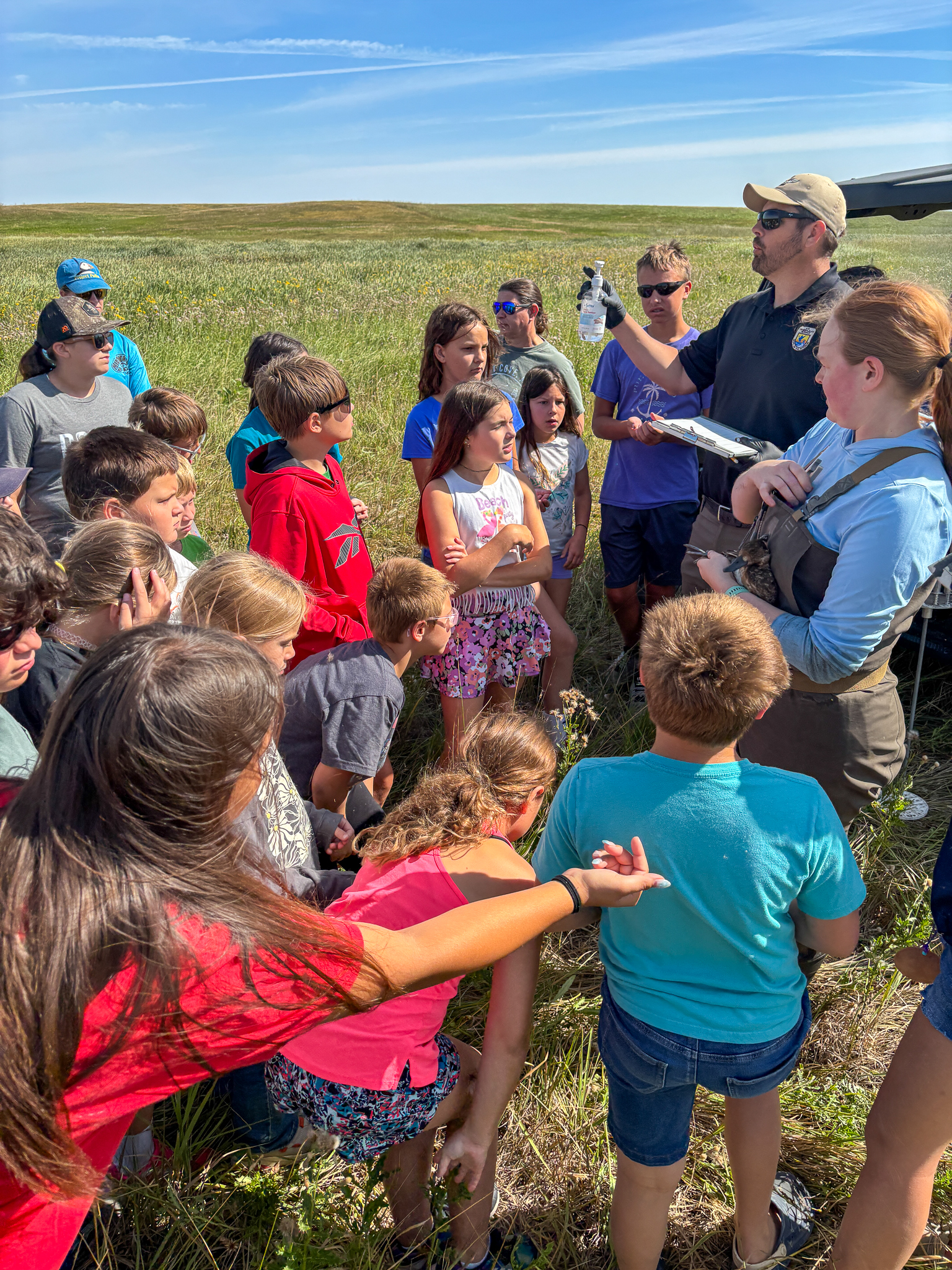
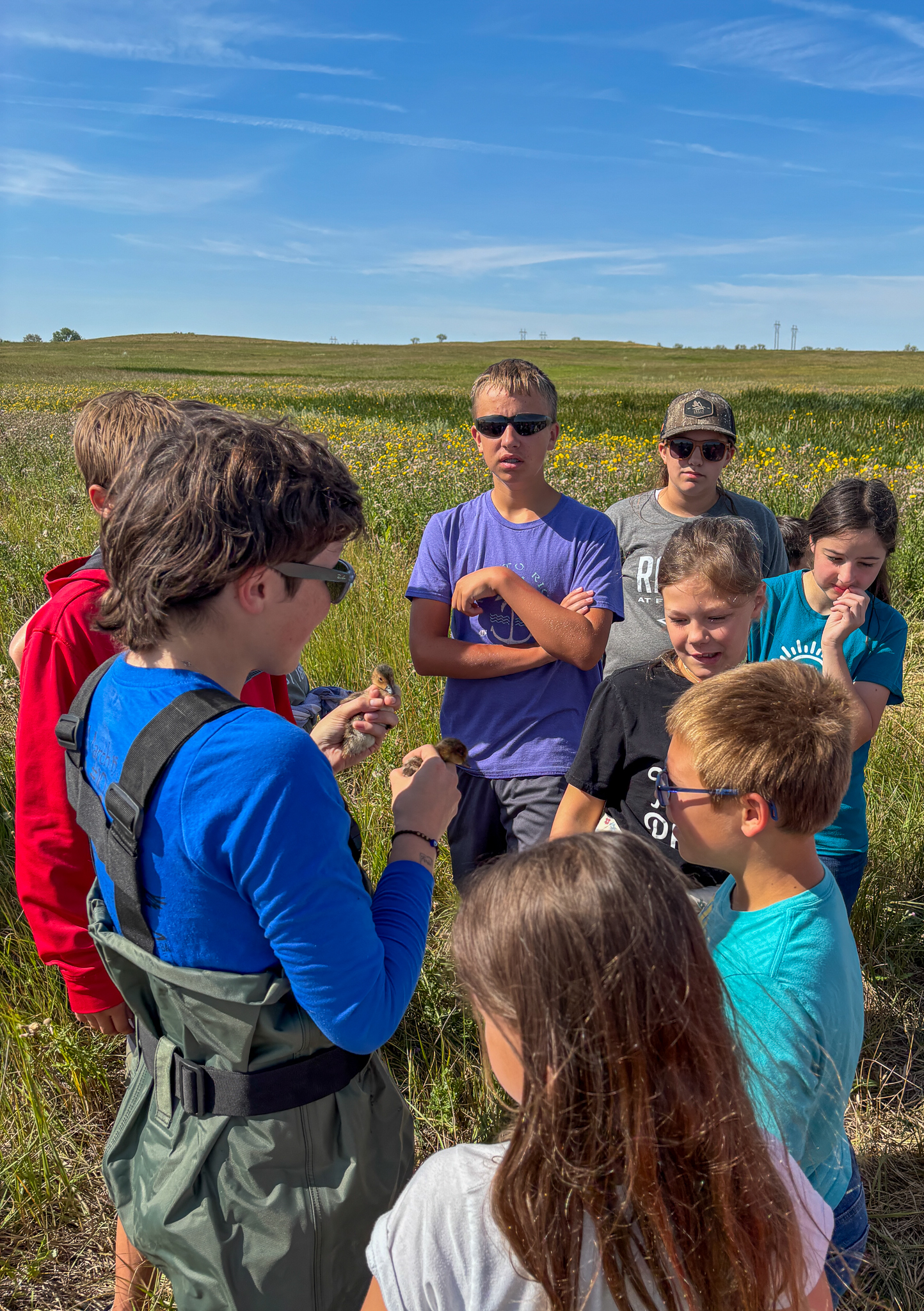
HAPET staff showed the students how biologists safely handle each duck, determine its age and sex, record information, and fit a lightweight, uniquely numbered band around its leg. Banding data helps scientists understand migration, survival, and habitat use. That knowledge guides conservation of wetlands and grasslands where many ducks nest.
Banding data are the lifeblood of conservation planning—these data help us understand movements and ensure we protect the right amount of habitat in the right places to support bird populations and the people who enjoy them.
Dr. Heath Hagy, Project Leader - HAPET
Science moved out of the textbook and into the students’ hands as they studied feather patterns, tromped through cattails, and gently pet ducks under careful guidance. Their bright laughter, excited bounces, and eagerness added another layer of life to the wetlands that day. The close encounter made waterfowl memorable, while the fieldwork revealed a larger lesson—ducks depend on a connected landscape, and people, especially kids, do too.
Walking with the campers at Audubon, many stopped to ask about the different native plants. Many wanted to confirm the identification of the plants out there or ask for the name of a plant. Campers being able to see, smell, and touch the plants allows them to fully appreciate the prairies and the many benefits it provides.
Emily Howe, Extension Agent, Ward County - NDSU
Exploring the refuge’s wetlands and grasslands helped students see, feel, and hear those connections. Wetlands can slow and store water, filter sediment and pollution, reduce flood impacts, and create places for outdoor recreation. Grasslands help water soak into the soil, hold carbon, support ranching, and provide nesting cover for ducks and other birds. Together, these habitats contribute to cleaner water, resilient communities, productive working lands, and a better quality of life for all.
National wildlife refuges are public lands where everyone can learn, explore, and build a personal connection to our land and water. You can visit a refuge, look for birds, and get outside. K–12 students can turn their observations into an entry for the Junior Duck Stamp Art Contest, and adult artists can explore the Federal Duck Stamp Art Contest. Purchasing a Junior Duck Stamp supports conservation education; purchasing a Federal Duck Stamp helps conserve wetland habitat.
Connection can be felt with one duck—but it can grow into a lifetime of support for wild spaces and the benefits they provide us all.
Special thanks to Raina Henze, Katie Schroyer, and Elizabeth Locke, the biologists in the photos and videos, for their hands-on expertise.
Also, thank you to the Audubon National Wildlife Refuge staff, HAPET staff, and 4H mentors and explorers who made this day special.