
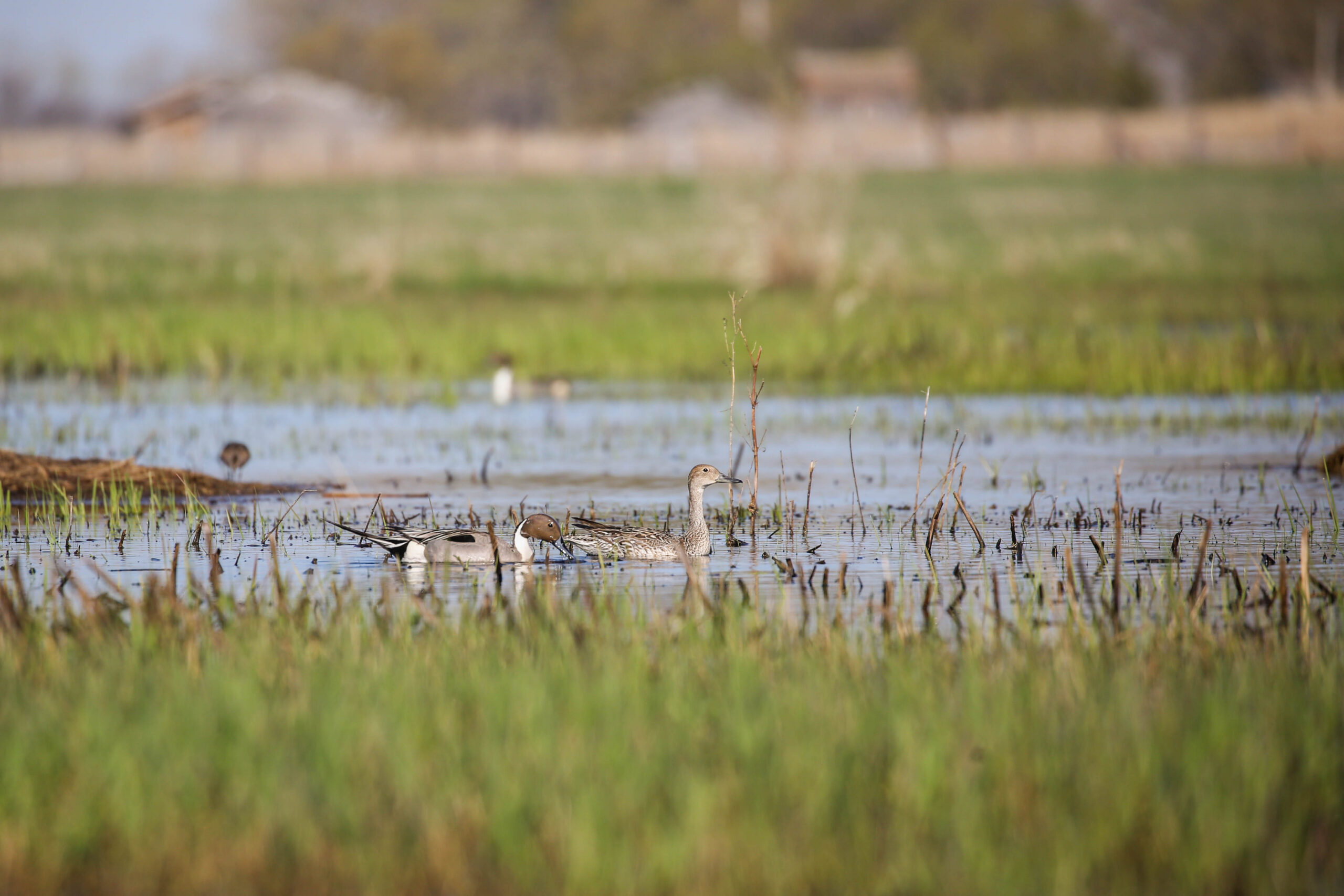
Small wetland conservation continues to be a cornerstone priority of Delta Waterfowl.
From 1997 to 2009, an alarming 125,400 acres of wetlands disappeared across the Prairie Pothole Region (PPR) in the United States. Most of those wetlands were small, shallow wetlands in crop fields, lost to drainage to grow grain. And since 2009, wetland loss rates appear to be accelerating.
Delta Waterfowl continues to work harder than ever to slow the tide of wetland losses and ensure ducks have breeding habitat. Delta scored a monumental win for ducks and duck hunters with the inclusion of the organization’s innovative Working Wetlands program into the 2018 U.S. Farm Bill. Working Wetlands, following a successful five-year pilot project in North Dakota, has been implemented by the Natural Resource Conservation Service initially as the Prairie Pothole Water Quality and Wildlife Program and more recently as the Migratory Bird Resurgence Initiative (MBRI). MBRI funding totaled $3.4 million in the PPR states in 2024.
Delta’s Policy Team continues to work in collaboration with Ducks Unlimited, the Theodore Roosevelt Conservation Partnership, and government leaders to realize the full potential of the program to conserve small wetlands in the Dakotas, Minnesota, Iowa, and Montana — the U.S. portion of the PPR. Delta is advocating for $50 million annually through a Migratory Bird Habitat Initiative to protect small wetlands, a measure which would conserve an estimated 336,276 acres of breeding waterfowl habitat in the PPR. At such scale, 56.7% percent of small wetlands would be conserved, supporting 507,524 breeding pairs of ducks.
In addition, Delta is pushing for $25 million annually for wintering habitat — post-harvest flooding of rice acres — in Arkansas, Mississippi, Louisiana, Texas, and California. The allocation would create 500,000 acres of wintering grounds habitat for waterfowl by keeping water on the landscape for 90 consecutive days between Sept. 1 and March 1. Importantly, the program would provide a habitat base to support the historic distribution of ducks and duck hunters in the south and in California’s Central Valley.
Delta appreciates the efforts of all partners working toward conserving critical habitat for ducks, including U.S. Fish and Wildlife Service Habitat and Population Evaluation Team, which provided key information that was central to developing the MBHI proposal.